Exploring Uluru-Kata Tjuta National Park: A Visitor's Guide
There's a reason people travel from every corner of the globe to stand in front of Uluru. Photographs never quite prepare you for it — the way the rock changes colour through the day, the silence of the surrounding desert, the feeling of being somewhere genuinely ancient. Uluru-Kata Tjuta National Park is one of the few places on earth that is dual World Heritage-listed, recognised for both its natural beauty and its living cultural significance to the Aṉangu, the Traditional Owners of this land.
If you're planning a trip to Uluru, here's what you need to know about the park, where to stay, and why the Cultural Centre deserves a spot at the very top of your itinerary.
A Living Cultural Landscape
Uluru and Kata Tjuta aren't just striking rock formations — they're part of Tjukurpa, the Aṉangu system of law, knowledge and creation stories that has shaped this landscape and its people for tens of thousands of years. Visiting with that in mind changes the experience entirely. This isn't a backdrop for a photo; it's Country that Aṉangu have cared for and been shaped by since time immemorial, and they generously continue to welcome visitors onto it today.
The park is open year-round, with the cooler months from May to September offering the most comfortable conditions for walking and cycling. Roads throughout the park are sealed and easily accessible, and a park pass is required for entry — it's best bought online in advance so you can head straight through the pre-paid lane when you arrive. A portion of every pass sold goes directly back into supporting Aṉangu homelands and community development, so simply visiting responsibly helps sustain the community that shares this place with the world.
Getting Out and Exploring
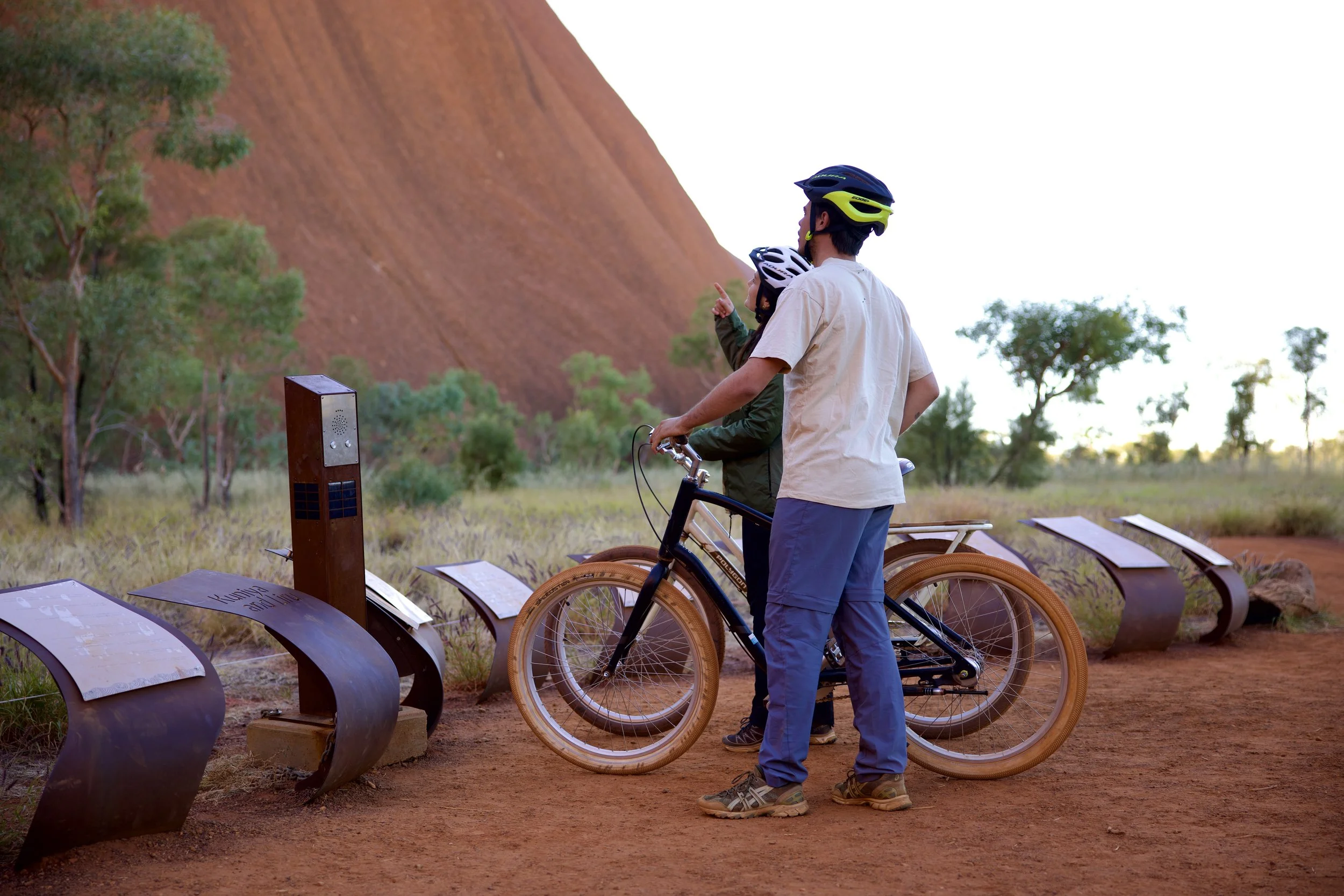
However you choose to experience the park there's no substitute for getting close. The 10.6km loop around the base reveals rock art, waterholes and folds in the stone that you simply can't appreciate from a distance, and free ranger-guided walks and cultural talks run regularly for those who want a deeper introduction. Kata Tjuta, the 36 dramatic domes about 40km from Uluru, is equally worth the drive, with its own walking trails through the gorges.
Where to Stay: Yulara and Ayers Rock Resort
There's no accommodation inside the national park itself — all visitor stays are based in Yulara, about 20km from Uluru, home to Ayers Rock Resort. The resort covers a genuinely wide spread of budgets and styles, so there's an option for almost any kind of trip:
Sails in the Desert – the resort's premium hotel, known for its distinctive white sail-shaped roofline, an art gallery, day spa and central pool.
Desert Gardens Hotel – set among native gardens, with some of the only rooms in the resort offering direct Uluru views.
Emu Walk Apartments – self-contained one and two-bedroom apartments, a solid choice for families or small groups.
Outback Pioneer Hotel & Lodge – more affordable hotel rooms alongside budget-friendly lodge and dormitory-style accommodation, with a lively BBQ and bar scene.
Ayers Rock Campground – powered and unpowered sites plus cabins, popular with road-trippers and camper van travellers.
Longitude 131° – a luxury tented camp just outside the resort proper, offering some of the closest uninterrupted views of Uluru available anywhere.
Guests staying anywhere in the resort can access the shared amenities across the property, and it's worth booking well ahead in the peak cooler months when demand is high.
Don't Skip the Cultural Centre
If you take one piece of advice from us, make it this: visit the Uluru-Kata Tjuta Cultural Centre before you do anything else in the park. It's designed to be the starting point for a visit, and it genuinely changes how you see everything that follows.
Opened in 1995 to mark ten years of joint management between Aṉangu and Parks Australia, the building itself tells a story — its architecture is based on the Tjukurpa of Kuniya and Liru, two ancestral beings connected to this Country. Inside, the Nintiringkupai Information Room shares oral histories, Pitjantjatjara language and information on traditional land management, while the Tjukurpa Tunnel is a good first stop to get your bearings on the park's cultural significance.
The Centre is also home to two Aṉangu-owned and operated art galleries:
Maruku Arts, a non-profit collective representing artists from more than twenty remote communities across the Central and Western Desert, selling traditional wood carvings, paintings and crafts.
Walkatjara Art, run by artists from the local Mutitjulu community, where you can often watch painters at work and hear the stories behind their pieces.
Ininti Café, also on site, is the only place to grab food and drink within the park itself — a welcome stop after a morning on the trail. The Cultural Centre is open daily from 7am to 5:45pm, and everything purchased through the on-site galleries puts money directly back into the local Aṉangu community.
Plan Your Visit
Uluru-Kata Tjuta National Park rewards visitors who slow down and take it in properly — book your accommodation in Yulara, start at the Cultural Centre to understand the place you're standing in, and get out onto the Base Loop to experience Uluru up close. If cycling the loop is on your list, our self-guided hire and guided tours are the only licensed way to ride it — we'd love to have you out on the track with us.
Have questions about planning your visit or booking a ride around Uluru? Get in touch with the Outback Cycling team — we're based right here in Yulara and always happy to help.